Trump administration's approach to federal disability rights guidance and its implications for policy enforcement
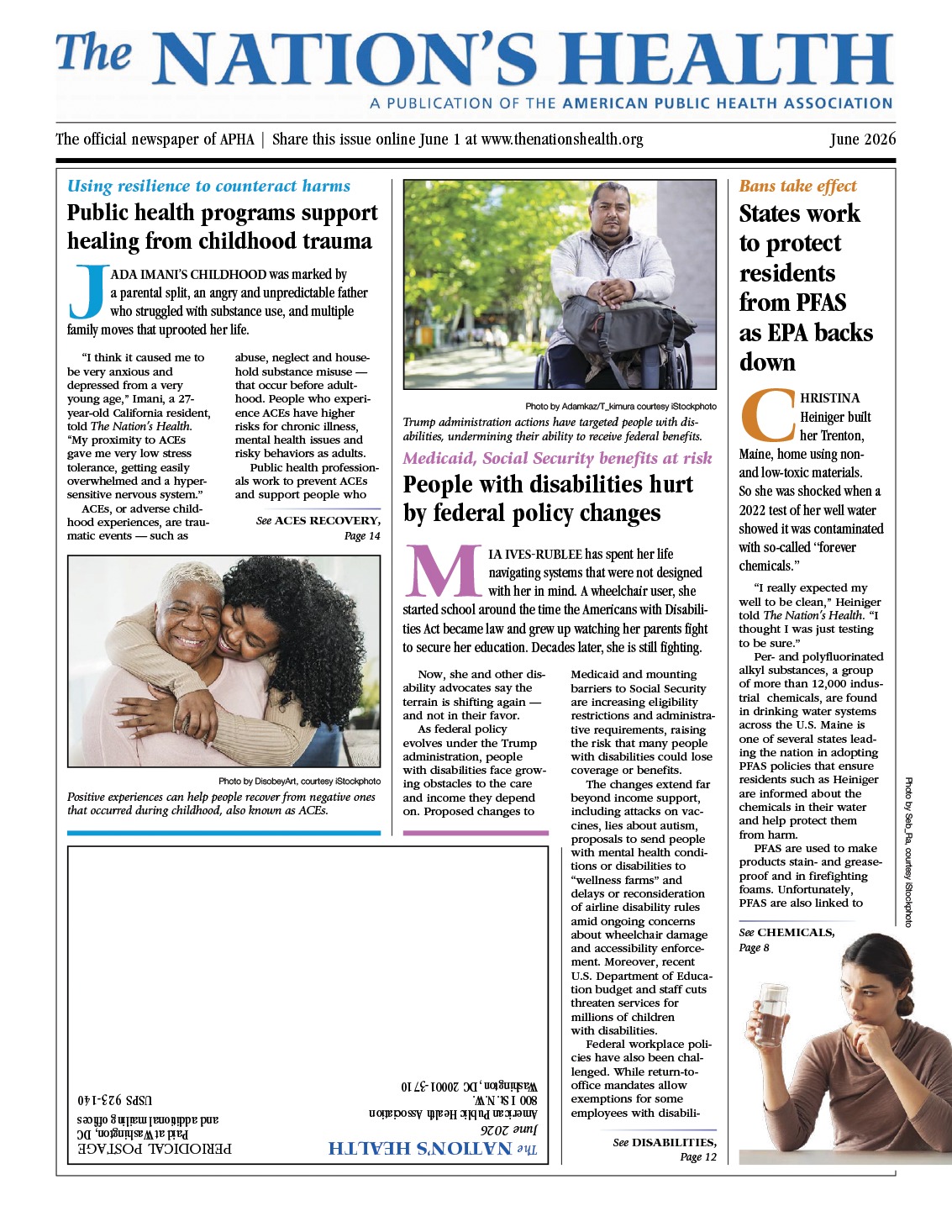 Image via www.thenationshealth.org
In mid-July 2026, the U.S. Department of Justice issued a notice stating that its long-standing guidance on enforcement of the Americans with Disabilities Act's "integration mandate" and the Supreme Court's 1999 Olmstead v. L.C. decision is "not enforceable," and that the department "will not rely upon the Olmstead guidance in its enforcement of Title II" of the ADA [S12]. The guidance at issue is a 2011 Q&A document, last updated in 2020, that explained what counts as the "most integrated setting" and how states and agencies should apply Olmstead [S11][S12]. DOJ said it plans to "revisit" the guidance in light of the 2024 Supreme Court decision in Loper Bright Enterprises v. Raimondo, and noted that although the document was always labeled nonbinding, "numerous courts have treated the Olmstead guidance as authoritative" [S11][S12]. The notice followed a June 2026 Office of Legal Counsel opinion asserting that neither the ADA nor Section 504 of the Rehabilitation Act requires states to serve people with mental disabilities in the most integrated setting [S11][S12]. Neither Olmstead itself nor the underlying statutes were repealed; what changed is the federal government's stated enforcement posture [S11]. Analysts and advocates say the practical effect may be reduced federal pressure on states over institutionalization and home- and community-based services, and greater reliance on private litigation [S11][S12]. The available excerpts are unevenly distributed across perspectives: only the Libertarian-tagged sources address the Olmstead guidance action directly, while other perspectives' sources speak to adjacent or unrelated matters.
Perspective Compass
How this story's sources are spread across the spectrum.
News
The independent-tagged excerpts are wire reports on federal court rulings against administration immigration policies rather than on disability rights guidance; they document judicial findings that the administration acted unlawfully in other enforcement areas [S6][S7].
- A federal judge in Massachusetts ruled the administration's "third country" deportation policy unlawful and ordered it set aside, while suspending the decision for 15 days to allow appeal; the judge said migrants have a right to "meaningful notice" and a chance to object [S6].
- That judge said the administration had repeatedly violated or tried to violate his orders, noting deportations of class members to El Salvador and Mexico without required process [S6].
- A federal judge in California found the administration had violated her December ruling on bond eligibility for detained immigrants and ordered DHS to provide notice and phone access to counsel; DHS responded that the Supreme Court had "repeatedly overruled" lower courts on mandatory detention [S7].
- These reports do not address the ADA, Olmstead, or federal disability rights guidance.
Commentary & Debate
Communist
Sources found under this framing do not address the Olmstead guidance decision specifically; they place disability policy within a broader argument that the administration is systematically dismantling civil rights protections and benefit programs on which disabled people depend [S1][S2].
- Advocates quoted argue that proposed Medicaid changes and mounting Social Security barriers increase eligibility restrictions and administrative requirements, risking coverage and benefit loss for people with disabilities [S1].
- Medicaid work-reporting requirements beginning in 2027 (about 80 hours per month) are described as a risk even for those nominally exempt, because red tape, paperwork and inconsistent state definitions could push eligible people off coverage [S1].
- One advocate frames the trend as "the resurgence of an ableist mindset — that your worth is tied to what you can produce," arguing added hurdles undermine rather than promote independence [S1].
- A civil rights coalition timeline characterizes the administration as installing officials at DOJ's Civil Rights Division who have "perverted the founding mission of the division," and as removing datasets documenting disparities [S2].
Socialist
Sourcing here is thin and off-topic: the provided socialist-tagged excerpts do not discuss federal disability rights guidance, the ADA, or Olmstead at all [S3][S4][S5].
- The excerpts cover general commentary on prospects for radical political change in the U.S., class politics and socialism's standing among voters [S3].
- Other excerpts address development-bank energy financing and privatization trends [S4] and a 2018 compilation of Judge Brett Kavanaugh's public remarks on overturning precedent and on agency-deference cases such as Auer v. Robbins [S5].
- No claim about the Trump administration's disability rights guidance can be grounded in these sources.
Democratic
No sources were provided under this perspective, so no Democratic-framed view of the topic can be summarized.
- No excerpts were supplied for this perspective.
Republican
The Republican-tagged excerpts do not address disability rights guidance; they concern conscience-protection rules, immigration enforcement oversight, and federal workforce buyouts, though one offers a general argument about the executive branch's duty to supply enforcement mechanisms for federal protections [S8][S9][S10].
- A commentary argues that when Congress creates federal protections without an enforcement mechanism, it is "the responsibility of the executive — as the enforcer of the laws — to meet those shortcomings with reasonable procedures," and criticizes rescinding a 2018 rule that clarified enforcement of health-care conscience protections [S8].
- Other excerpts cover Republican lawmakers urging investigation and de-escalation of ICE operations in Minneapolis after the fatal shooting of protester Alex Pretti, with Sen. Murkowski saying agents "do not have carte blanche" [S9].
- A further excerpt reports a federal judge delaying the deadline for the administration's federal-worker buyout amid union suits calling it "arbitrary and capricious," as the administration sought to downsize the workforce and require remote employees to return in person [S10].
- No excerpt in this group defends or critiques the DOJ Olmstead guidance decision.
Libertarian
These are the only sources that directly report the action: DOJ declared the Olmstead/integration-mandate guidance nonbinding and unenforceable, framed as a legal clarification about the limits of agency guidance, with practical consequences that shift enforcement from the federal government toward states, courts and private litigants [S11][S12].
- DOJ's notice, from Assistant Attorney General for Civil Rights Harmeet K. Dhillon, states the department "will not rely upon the Olmstead guidance in its enforcement of Title II" and that similar guidance documents are also not enforceable [S12].
- The rationale is framed in terms of legal formality and deference doctrine: guidance documents "are not laws" but explain agency interpretation, and DOJ says it will revisit the guidance under Loper Bright to test consistency with the ADA's "single, best meaning" [S11][S12]. A June 2026 OLC opinion argued Olmstead never established a broad integration mandate and that current regulations may exceed what the law requires [S11][S12].
- Analysis notes Olmstead itself stands and the ADA and Section 504 are not repealed, but removing DOJ's active enforcement role "does remove a powerful backstop," potentially letting states scale back HCBS waivers, tighten eligibility, or redirect funds toward institutional care, and pushing individuals toward private lawsuits and advocacy groups [S11].
- Critics quoted include Alison Barkoff, who says the guidance "reflects the overwhelming consensus of courts," and Regan Rush, who notes the first Trump administration produced the 2020 update now called unenforceable and warns states following DOJ's cue "risk violating the rights of people with disabilities" [S12].
Where perspectives agree
- Sources across perspectives agree that federal enforcement mechanisms — not just underlying statutes — determine whether protections are honored in practice: disability-focused analysis warns that withdrawing DOJ enforcement removes "a powerful backstop" even though rights remain on the books [S11], and a Republican-tagged commentary similarly argues that federal protections left "without any clear enforcement mechanism" leave affected people with "little recourse" [S8].
- There is agreement that the Olmstead decision and the ADA and Section 504 statutes themselves remain in force, and that what changed in July 2026 was DOJ's stated enforcement posture toward a guidance document [S11][S12].
- Communist-tagged and Libertarian-tagged sources converge on the concern that Medicaid home- and community-based services and eligibility rules are a pressure point for people with disabilities, whether through work-reporting requirements and administrative hurdles [S1] or through states scaling back HCBS waivers absent federal pressure [S11].
Where perspectives disagree
- Whether the Olmstead guidance ever carried legal weight: DOJ's notice and OLC opinion hold that the guidance was always nonbinding and that neither the ADA nor Section 504 requires the most integrated setting [S11][S12], while former DOJ officials quoted in the same reporting say the guidance "reflects the overwhelming consensus of courts" and that numerous courts treated it as authoritative [S12].(Libertarian)
- How to characterize the administration's motive: Communist-tagged sources describe a deliberate, ideologically driven rollback — "actions [that] have targeted people with disabilities" [S1] and political appointees who have "perverted the founding mission" of the Civil Rights Division [S2] — whereas the Libertarian-tagged reporting presents DOJ's own framing as a technical clarification about nonbinding guidance and post-Loper Bright interpretation [S11][S12].(Communist, Libertarian)
- Where enforcement responsibility should sit: analysis of the DOJ move notes an expected shift toward private lawsuits and state protection-and-advocacy agencies as the federal role recedes [S11], while a Republican-tagged commentary contends the executive branch has an affirmative duty to supply enforcement procedures rather than leave protections unenforced [S8].(Libertarian, Republican)
- Whether federal enforcement agencies are following the law more broadly is contested in adjacent areas: independent reporting cites judges finding repeated violations of court orders [S6][S7], while DHS responded that "ICE has the law and the facts on its side" and that the Supreme Court had "repeatedly overruled" lower courts [S7]; Republican-tagged reporting shows some GOP lawmakers themselves demanding investigations and limits on federal agents [S9].(Independent, Republican)
Posted by Premium subscribers, reviewed before it appears here — not part of the AI-generated comparison above.
No community posts yet.
Log in with a Premium account to post in the discussion.
Made by Premium subscribers, visible the moment they're posted — graded by hand once the outcome is known.
No predictions yet.
Log in with a Premium account to make a prediction.
Sources
Communist
Tagged Communist because it was found via a communist-framed search query — this reflects how it was discovered, not independent verification of the outlet's actual leaning.
- People with disabilities hurt by federal policy changeswww.thenationshealth.org
- Trump Administration Civil and Human Rights Rollbackscivilrights.org
Socialist
Socialist is this outlet's commonly cited political lean per independent media-bias trackers — not independently verified by this app.
- Socialism on Common Dreams's sitewww.commondreams.org
- Kavanaugh Has Publicly Discussed Cases Before, Including Those He Would Like to Overturnwww.commondreams.org
- Privatization on Common Dreams's sitewww.commondreams.org
Independent
Independent is this outlet's commonly cited political lean per independent media-bias trackers — not independently verified by this app.
Republican
Republican is this outlet's commonly cited political lean per independent media-bias trackers — not independently verified by this app.
- How A Republican Congress Can Protect Health-Care Workers From The Biggest Federal Erasure Of Their Conscience Rights Everthefederalist.com
- Powerful House Republican suggests Trump consider pulling ICE out of Minneapolis after Alex Pretti shootingnypost.com
- Federal judge delays Trump administration's buyout deadline for federal workerswww.foxnews.com
Libertarian
Tagged Libertarian because it was found via a libertarian-framed search query — this reflects how it was discovered, not independent verification of the outlet's actual leaning.
- DOJ Will No Longer Enforce Key Disability Rights Guidancespecialneedsanswers.com
- Justice Department Deems Major ADA Guidance ‘Not Enforceable’www.disabilityscoop.com